
Restorative · Replace missing teeth
Dental Bridges in Lahore — Fixed Teeth in Two Visits
A gap from a missing tooth affects more than your smile. Neighbouring teeth drift, the bite changes and chewing shifts to one side. A dental bridge fills the gap with a fixed, natural-looking tooth that doesn't come out.
Updated
- Fixed — nothing to remove at night
- Usually completed in two visits about a week apart
- Porcelain or zirconia shade-matched to your teeth
In short
What is a dental bridge?
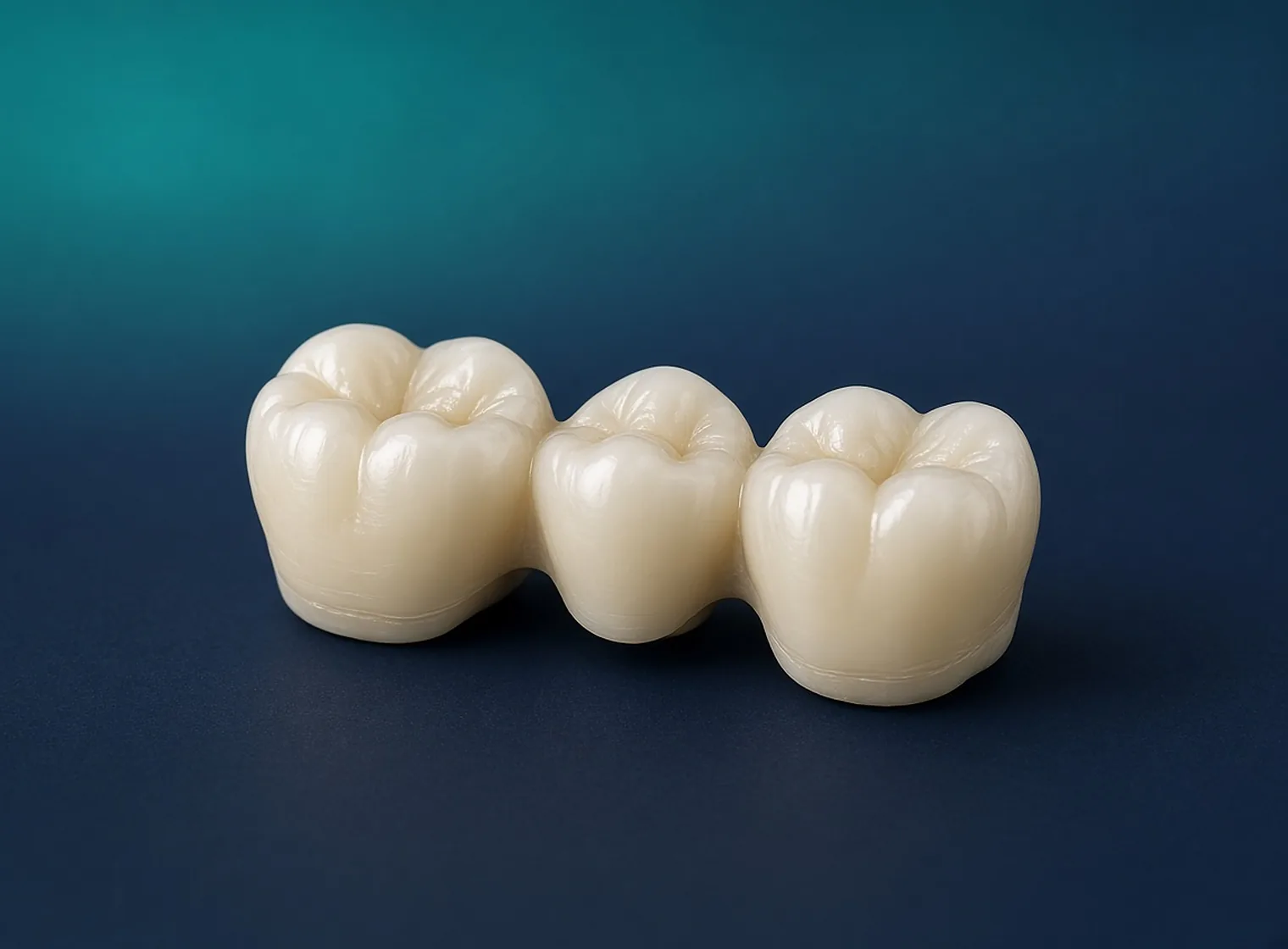
A dental bridge replaces one or more missing teeth with an artificial tooth (called a pontic) that is joined to crowns on the teeth either side of the gap (called abutments). The whole unit is cemented in place, so it can't be removed. Bridges can also be supported by dental implants when several teeth are missing.
Types of bridges
Which bridge suits your gap?
Traditional bridge
Crowns on the teeth on both sides support the replacement tooth. The most common and strongest design.
Cantilever bridge
Supported from one side only. Used carefully for small front teeth where there is a tooth on just one side.
Resin-bonded (Maryland) bridge
A thin wing is bonded to the back of a neighbouring tooth. Very conservative, best for a single front tooth with light bite forces.
Implant-supported bridge
Two or more implants support a row of teeth — no natural teeth are prepared.
Bridge or implant?
Bridge vs implant vs partial denture
All three replace missing teeth. The best one depends on the health of the neighbouring teeth, your bone and your budget.
| Bridge | Implant | Partial denture | |
|---|---|---|---|
| Fixed in place | Yes | Yes | No — removable |
| Affects neighbouring teeth | Yes — they are crowned | No | Clasps rest on them |
| Treatment time | About 1–2 weeks | Usually 3–6 months | 2–4 weeks |
| Prevents bone loss under the gap | No | Yes | No |
| Relative cost | Moderate | Highest | Lowest |
| Ideal when | Neighbouring teeth already need crowns | Neighbouring teeth are healthy and bone is adequate | Several teeth missing, or budget is the priority |
Honest advice
When a bridge is the right choice — and when it isn't
A bridge makes the most sense when the teeth either side of the gap already have large fillings or crowns. Crowning them strengthens those teeth and replaces the missing one in the same treatment — two problems solved at once.
If the neighbouring teeth are completely healthy, we'll talk to you about an implant first, because a bridge requires removing healthy enamel from those teeth to fit the crowns. An implant leaves them untouched and also helps preserve the jawbone under the gap.
Bridges need healthy gums and strong abutment teeth. If those teeth have gum disease or short roots, we treat the gums first with deep scaling or consider another option. And because the pontic sits on the gum, cleaning under it is essential — we'll show you how.
The process
How a bridge is fitted
- 01
AssessmentVisit 1
X-rays check the roots and bone of the supporting teeth; we discuss bridge, implant and denture options.
- 02
Preparation & impressionsVisit 1
The supporting teeth are shaped under local anaesthetic and an accurate impression is taken.
- 03
Temporary bridgeVisit 1
A temporary bridge protects the teeth and fills the gap while the lab works.
- 04
Laboratory fabricationAbout a week
The bridge is made in porcelain or zirconia to your shade and bite.
- 05
Fit & bite checkVisit 2
Fit, colour and bite (checked with T-Scan) are confirmed before the bridge is cemented.
Aftercare
Caring for your bridge
The area under the false tooth is where plaque collects. Clean it every day.
Do
- Thread floss or use a floss threader under the pontic daily
- Use interdental brushes around the supporting crowns
- Brush twice daily with fluoride toothpaste
- Keep six-monthly check-ups
Avoid
- Bite very hard foods on the bridge
- Ignore bleeding under the bridge
- Use your teeth as tools
From Dr. Aqib
About Dental Bridges
Not only can missing teeth dramatically affect the appearance of your smile, but it can also affect your biting function and overall oral health. When a missing tooth leaves a gap, the surrounding teeth become empty or rotate, causing an abnormal bite This can also lead to issues such as discomfort, difficulty chewing, and temporomandibular joint dysfunction (TMJD) are. Fortunately, dental braces provide an effective solution for filling in these gaps, restoring function, and improving your smile. At Ideal Smile Dentistry, Dr. Aqib Mudassar specializes in providing high-quality dental floss to help you achieve a healthy, perfect smile.
Dr. Aqib Talking About Bridges
From Dr. Aqib
How Does the Dental Bridges Treatment Work?
The bridge covers the space where the teeth are missing. Natural teeth or dental implants are cemented around the space. These teeth act as anchors for the bridge called abutments. The replacement tooth, called a pontic, is attached to the crown. Like crowns, you have options for your bridges. Porcelain or ceramic bridges can match your natural tooth color. Bridges can help reduce your risk of gum disease, correct some gum-related issues and improve your mobility.
The Benefits of Dental Bridges
Dental bridges not only improve the aesthetics of your smile but also prevent further dental issues caused by missing teeth. By filling the gap, dental bridges help to maintain the alignment of your teeth, reducing the risk of gum disease, tooth decay, and bite misalignment. They also play a significant role in enhancing speech clarity and improving chewing efficiency.
At Ideal Smile Dentistry, we offer a range of materials for dental bridges, including porcelain or ceramic, which can be matched to the color of your natural teeth. With proper care and maintenance, dental bridges can last many years, providing a durable and effective solution for missing teeth.
Dr. Aqib and the team at Ideal Smile are dedicated to ensuring that every patient receives the highest level of care. If you’re struggling with missing teeth, dental bridges can be a game-changer in restoring your oral health and confidence.
Feel Free To Contact Our Friendly Reception Staff With Any Dental Enquiry.
Videos
Watch: Dental Bridges at Ideal Smile
Dental Bridges — video 1

Why Ideal Smile
Why choose Ideal Smile for your bridge?
- 20,000+ crowns & bridgesExperience across simple and long-span bridges.
- Bite checked with T-ScanNew crowns and bridges are checked digitally so they don't overload your bite or jaw joints.
- All options explainedBridge, implant and denture compared honestly for your case.
- Cost explained firstWritten plan and full estimate before treatment starts — our “give notice before you arrive” rule.
Cost & planning
What does a dental bridge cost?
A bridge is priced per unit — each crown and each replacement tooth counts as one. A three-unit bridge replacing one tooth, for example, has two crowns and one pontic. Your written estimate lists each unit and any preparatory work.
- Number of unitsSupporting crowns plus replacement teeth.
- MaterialZirconia, porcelain or PFM.
- Preparatory workRoot canals or gum treatment on supporting teeth.
- Implant-supportedIncludes implants and abutments if chosen.
FAQs
Frequently asked questions
Still unsure? Call +92 323 4000101 or message us on WhatsApp — a real person from our team will answer.
How long does a dental bridge last?
Typically 10–15 years, often longer with good cleaning under the pontic and regular check-ups.
Does getting a bridge hurt?
The teeth are numbed during preparation. Mild sensitivity for a few days afterwards is common.
Can I eat normally with a bridge?
Yes. Once fitted, a bridge feels and functions like natural teeth. Avoid biting very hard objects.
Is a bridge or an implant better?
If the neighbouring teeth are healthy, an implant usually is, because it doesn't involve them. If they already need crowns, a bridge can be the smarter choice. We'll explain both for your case.
Can a bridge be replaced if it fails?
Yes, if the supporting teeth remain healthy. If they don't, implants may be used instead.
Why do I need to clean under the bridge?
Food and plaque collect under the false tooth. Without daily cleaning, gum disease or decay can develop around the supporting teeth.
Related reading
Helpful Articles From Our Blog
Related treatments
You may also want to explore
Ready to fill the gap?
Book a consultation and we'll compare a bridge, an implant and a partial denture for your situation — with clear pros, cons and costs.
185-CCA, DD Phase IV, DHA Lahore · Get directions · Mon–Thu 12–8 PM · Fri 3–9 PM · Sat 1–6 PM