
Hygiene · Gum health
Deep Scaling & Root Planing in DHA Lahore to Stop Gum Disease
Bleeding gums, bad breath or teeth that feel slightly loose are signs of gum disease. Deep scaling removes the hardened tartar and bacteria hiding below the gumline, where brushing and normal cleaning cannot reach, so the gums can heal and tighten.
Updated
- Ultrasonic and hand instruments for thorough root cleaning
- Local anaesthetic for deeper pockets — comfortable throughout
- Pocket depths measured before and after, so you see the improvement
In short
What is deep scaling?
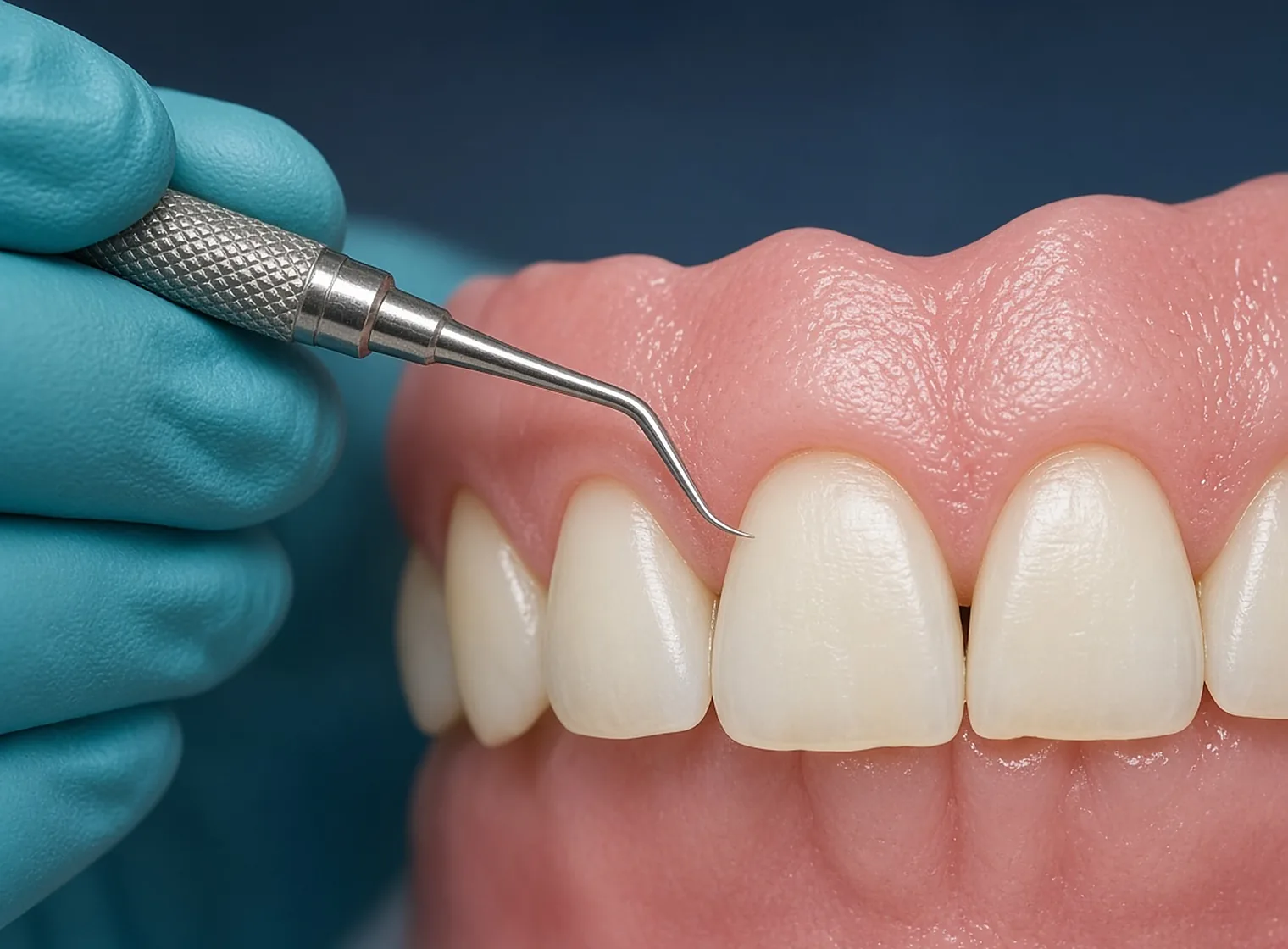
Deep scaling and root planing (SRP) is a non-surgical gum treatment. Scaling removes plaque and tartar (calculus) from the tooth and the root surface inside the gum pocket; root planing smooths the root so the gum can reattach to it. It is the first-line treatment for periodontitis and usually takes one or two visits.
Warning signs
Signs you may need deep scaling
Gum disease is usually painless in its early stages, which is why many people in Lahore first notice it only when a tooth becomes loose.
Gums that bleed when brushing
Healthy gums don't bleed. Bleeding is the earliest sign of inflammation.
Bad breath that doesn't go away
Bacteria living in deep pockets produce odour that mouthwash only masks.
Teeth that feel loose or are drifting
Gaps appearing between front teeth can mean the supporting bone is shrinking.
Gums pulling away from teeth
Teeth look longer and roots become sensitive to cold.
Visible yellow or brown deposits
Tartar along the gumline — common with tea, smoking, paan and naswar use.
Diabetes or smoking
Both raise the risk of gum disease and make it progress faster.
Why it matters
Gum disease is the main reason adults lose teeth
Plaque that isn't removed hardens into tartar within days. Tartar below the gum irritates the tissue and shelters bacteria; the gum detaches from the tooth, forming a pocket. As pockets deepen, the bone that holds the tooth is slowly lost. That bone does not grow back on its own, which is why early treatment matters so much.
Deep scaling stops this process by removing the cause. Once the root surface is clean and smooth, inflammation settles, bleeding stops and the gum shrinks back and tightens around the tooth. Pockets that measured 5–6 mm often reduce by one to two millimetres, which is the difference between a pocket you can keep clean and one you can't.
Gum health also matters beyond the mouth. Research shows that periodontitis is associated with poorer blood-sugar control in diabetes, and treating gum disease can modestly improve HbA1c levels. Links with heart disease and pregnancy complications are also being studied. We explain these connections in more detail on our Complete Health Dentistry page.
If you only have mild gum inflammation (gingivitis) without pockets, a routine scaling and polishing may be all you need. We measure your gums first and recommend the lighter option whenever it is enough.
From Dr. Aqib
What to Expect: The Deep Scaling Process
- 01
Initial Assessment
Your dentist examines your teeth, gums, and pocket depths to determine the severity of plaque and tartar buildup.
- 02
Local Anesthesia (If Needed)
For deeper pockets or sensitive gums, a local anesthetic is applied so the procedure stays comfortable throughout.
- 03
Scaling
Ultrasonic and hand instruments remove tartar from above and below the gumline, along the full length of the root.
- 04
Root Planing
The root surface is smoothed so gum tissue can reattach cleanly and bacteria have less chance to collect again.
- 05
Polishing & Fluoride
Teeth are polished smooth and a fluoride treatment may be applied to strengthen enamel and protect against decay.
- 06
Aftercare Guidance
You'll receive a personalized home-care and follow-up schedule to keep your gums healthy long term.
Know the difference
Deep scaling vs regular cleaning
| Regular scaling & polishing | Deep scaling & root planing | |
|---|---|---|
| Area treated | Tooth surfaces above and just below the gumline | Above and deep below the gumline, along the root |
| Best for | Healthy gums or mild gingivitis | Periodontitis, pockets of 4 mm or more |
| Anaesthesia | Not usually needed | Often used for comfort |
| Visits | One | One or two, plus a review |
| Follow-up | Every 6 months | Maintenance every 3–4 months |
Aftercare
After deep scaling: helping your gums heal
Do
- Brush twice daily with a soft brush and fluoride toothpaste
- Clean between teeth daily with floss or interdental brushes
- Use warm salt-water rinses for a few days if gums feel tender
- Keep your review appointment to re-measure the pockets
- Manage blood sugar carefully if you are diabetic
Avoid
- Smoke or use naswar — they slow healing and hide bleeding
- Skip cleaning areas that feel tender; gentle cleaning helps them heal
- Eat very hard or spicy food for the first day
- Stop maintenance visits once bleeding stops
Some sensitivity to cold for a week or two is normal as inflamed gums shrink back. A desensitising toothpaste helps; tell us if it lasts longer.
From Dr. Aqib
What Is Dental Deep Scaling?
Bleeding gums, bad breath, or loose teeth? Deep scaling removes plaque and tartar hiding below the gumline to stop gum disease before it damages your teeth for good. Performed by experienced dentists using painless ultrasonic technology.
Deep scaling, also called scaling and root planing (SRP) , is a non-surgical periodontal treatment that removes plaque, tartar (calculus), and bacterial toxins from both the visible surface of the teeth and the root surfaces hidden beneath the gumline.
Unlike a routine cleaning, deep scaling reaches deep periodontal pockets where a toothbrush and floss can never go. Our dentists use manual scalers and ultrasonic instruments to gently break up hardened tartar, smooth the root surface, and help the gum tissue reattach to a clean tooth root — stopping gum disease at its source.
If you've been told you have gingivitis , periodontitis , or receding, bleeding gums, deep scaling is usually the first and most effective line of treatment before more invasive procedures are ever needed.

From Dr. Aqib
Deep Scaling & Root Planing: in detail
Signs You May Need Deep Scaling
Gum disease often develops silently. Book a check-up if you notice any of the following:
- Gums that bleed when brushing or flossing
- Red, swollen, or tender gums
- Persistent bad breath or a bad taste in the mouth
- Gums that appear to be pulling away from the teeth
- Loose or shifting teeth
- Visible yellow or brown tartar buildup near the gumline
- Sensitivity to hot or cold that wasn't there before
Why Choose Ideal Smile Dentistry
- Experienced dentists trained in modern periodontal care
- Ultrasonic scaling technology for a gentler, faster clean
- Comfortable, sterile clinic in DHA Phase IV, Lahore
- Transparent pricing with a free initial consultation
- Personalized aftercare and maintenance plans
From Dr. Aqib
Key Benefits of Teeth Deep Scaling
Regular deep scaling isn't just about a cleaner smile — it protects your long-term oral and overall health.
Prevents Gum Disease
Removes the plaque and tartar that cause gingivitis and stops it from progressing into more serious periodontitis.
Eliminates Bad Breath
Clears out the bacteria trapped beneath the gumline that cause chronic bad breath, leaving your mouth genuinely fresh.
Protects Your Teeth
Reduces pocket depth around the roots, helping prevent tooth mobility, bone loss, and eventual tooth loss.
Brightens Your Smile
Clears surface stains from tea, coffee, and tobacco for a noticeably brighter, healthier-looking smile.
Supports Overall Health
Gum disease has been linked to heart disease and diabetes. Healthy gums support better whole-body health.
Saves You Money
Preventive scaling costs far less than treating advanced gum disease, root canals, or dental implants later.
From Dr. Aqib
How Often Should You Get Deep Scaling?
For most patients with healthy gums, a professional cleaning every six months is enough to keep plaque and tartar under control. However, if you have a history of gum disease, deep pockets, smoking, or diabetes, your dentist may recommend a maintenance cleaning every three to four months to keep bacteria from rebuilding below the gumline.
At your consultation, our dentists will measure your gum pocket depths and design a personalized recall schedule so your gums stay healthy between visits.

Why Ideal Smile
Why choose Ideal Smile for gum treatment?
- Measured, not guessedPocket charting before and after, so progress is visible.
- Gentle ultrasonic cleaningFaster, more comfortable removal of hardened tartar.
- USA-licensed dentistDr. Aqib Mudassar, DDS (USA) — California State Board certified in 2003, practising since 1997.
- Cost explained firstYou see your plan and the full cost in writing before treatment begins — our “give notice before you arrive” rule.
Cost & planning
How much does deep scaling cost in Lahore?
The cost depends on how many areas of the mouth have pockets and how much tartar is present. After measuring your gums we give you a written estimate — often deep scaling is only needed in some quadrants, not the whole mouth.
- Number of quadrantsTreatment may be limited to the areas with pockets.
- SeverityHeavy tartar and deep pockets take longer.
- AnaesthesiaIncluded when needed for comfort.
- Maintenance planFollow-up cleanings are priced separately.
FAQs
Frequently asked questions
Still unsure? Call +92 323 4000101 or message us on WhatsApp — a real person from our team will answer.
Is deep scaling painful?
Most patients feel little to no discomfort thanks to local anesthesia and gentle ultrasonic technology. Some mild sensitivity for a day or two afterward is normal and temporary.
Does deep scaling make teeth loose?
No. Teeth that already have bone loss can feel slightly looser for a short time because the tartar that was splinting them has gone, but as inflammation settles the gums tighten and stability usually improves.
Will my gums grow back after deep scaling?
Deep scaling helps inflamed gum tissue heal and reattach more tightly to the tooth, which often reduces pocket depth — but it cannot reverse gum recession that has already occurred.
How long does the procedure take?
A full-mouth deep scaling is usually completed in one to two visits, with each session lasting roughly 45–90 minutes depending on how much tartar buildup is present.
How often should I have deep scaling?
Deep scaling is done once to bring gum disease under control. After that, patients with a history of periodontitis need a maintenance cleaning every three to four months to stop bacteria rebuilding below the gum.
Is deep scaling safe during pregnancy?
Yes, and treating gum disease during pregnancy is recommended. The second trimester is the most comfortable time. Let us know you are pregnant so we can plan X-rays and medicines appropriately.
Does deep scaling reverse gum recession?
Deep scaling helps inflamed gums heal and reattach more tightly, often reducing pocket depth, but it cannot reverse recession that has already happened.
How is deep scaling different from a regular cleaning?
A regular cleaning cleans the visible tooth surface above the gums. Deep scaling and root planing clean below the gumline along the root, treating gum disease a routine cleaning can't reach.
How much does deep scaling cost in Lahore?
Cost depends on the severity of gum disease and the number of visits required. Contact Ideal Smile Dentistry in DHA Lahore for a personalized quote after a free consultation.
Related reading
Helpful Articles From Our Blog
Related treatments
You may also want to explore
Ready for Healthier Gums?
For those seeking teeth deep scaling treatment in DHA Lahore, Ideal Smile Dentistry is here to help. Our team provides comprehensive, comfortable care tailored to your needs — take the first step toward a healthier smile today. Feel Free To Contact Our Friendly Reception Staff With Any Dental Enquiry.
185-CCA, DD Phase IV, DHA Lahore · Get directions · Mon–Thu 12–8 PM · Fri 3–9 PM · Sat 1–6 PM